
Choosing the wrong size circuit breaker is one of the most common and most dangerous electrical mistakes — too small and it trips constantly under normal load, too large and it fails to protect the circuit before cable damage or fire risk develops. Correct sizing is not guesswork; it follows a clear, logical process. This guide walks through exactly how to do it.
Step 1 — Determine the Load Current
Start by calculating the actual current draw of everything the circuit will supply. For a simple resistive load like lighting, this is straightforward wattage divided by voltage. For circuits with multiple outlets or mixed loads, add up the connected load realistically, accounting for diversity — not everything runs at full load simultaneously in most real installations, though safety margins should still be conservative rather than optimistic.
Step 2 — Check Cable Capacity
The breaker size must never exceed the current-carrying capacity of the cable it protects. If you install a breaker rated higher than the cable can safely carry, the cable can overheat and become a fire risk before the breaker ever trips — this defeats the entire purpose of the protection. Cable capacity depends on conductor size, insulation type, installation method and ambient temperature, all of which are covered in standard cable rating tables that any qualified electrician will reference.
Step 3 — Apply the Correct Safety Margin
Standard practice sizes the breaker at or slightly above the calculated load current, but at or below the cable's safe carrying capacity. For example, a circuit calculated at 14A load, on cable rated for 20A, would typically use a 16A breaker like the Schneider Electric Single Pole MCB 16A — above the load to avoid nuisance tripping under normal conditions, safely below the cable's true capacity.

Step 4 — Check Breaking Capacity Against Fault Current
Beyond the continuous current rating, every breaker has a breaking capacity — the maximum fault current it can safely interrupt, expressed in kA. This must be verified against the actual available fault current at that point in your installation, which depends on transformer size, cable length and supply configuration. Using a breaker with insufficient breaking capacity for the available fault current is a serious safety hazard, since the device may fail catastrophically rather than safely interrupting a genuine fault. Devices like the ABB SH201 Series MCB, 6kA specify this breaking capacity clearly — always check it matches or exceeds what your installation requires.
Step 5 — Consider the Type Curve for MCBs
MCBs come in different trip curves — commonly B, C and D — which determine how quickly the device trips in response to a short-term current surge versus a sustained overload. Type B suits resistive loads like lighting and general sockets. Type C suits loads with moderate inrush current like fluorescent lighting or small motors. Type D suits loads with high inrush current such as large motors or transformers. Choosing the wrong curve type causes nuisance tripping even when the current rating itself is correctly sized.
Worked Example: Sizing for a Small Workshop
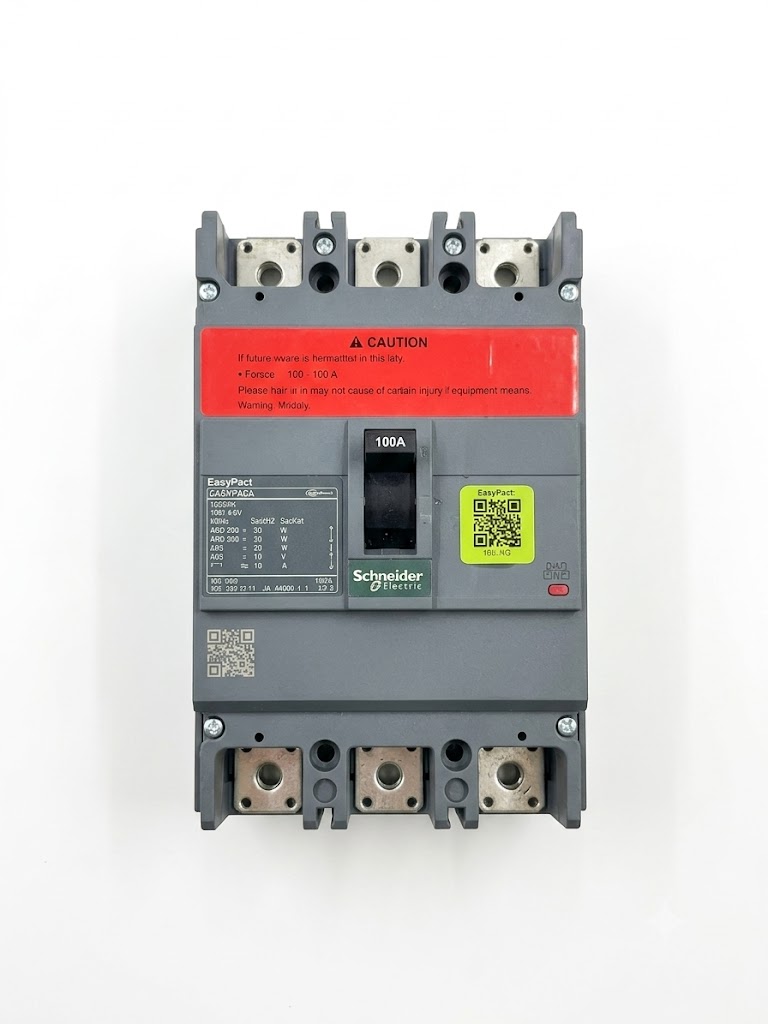
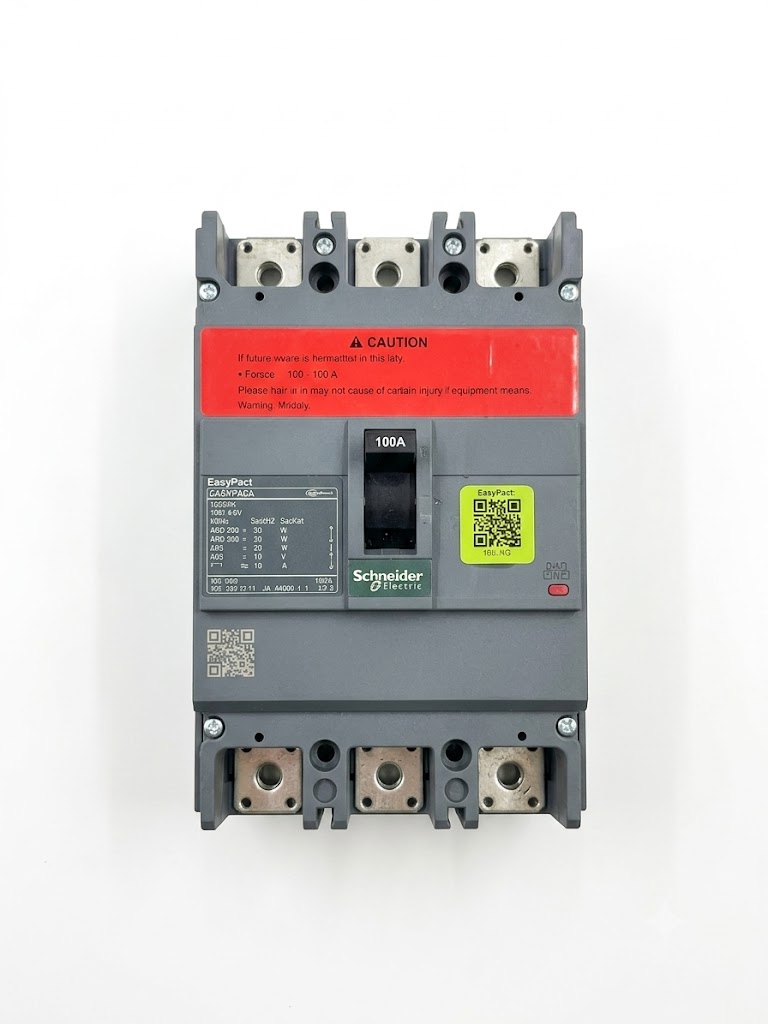
Consider a small workshop circuit feeding several 13A power tools, with realistic diversity suggesting a peak load around 28A on cable rated for 32A. A correctly sized device here would be a 32A MCB with an appropriate breaking capacity for the site's fault level — while for the main incomer feeding the whole workshop board, an MCCB rated appropriately for the total connected load, such as a 100A unit, would typically be selected instead of a standard MCB given the higher current involved.
Common Sizing Mistakes
- Sizing the breaker to the cable's maximum theoretical capacity rather than the actual expected load, causing under-protection.
- Ignoring breaking capacity and only checking the continuous current rating.
- Using the wrong trip curve type for loads with significant inrush current.
- Failing to account for future load growth when sizing a main distribution board.
- Assuming a higher-rated breaker is always 'safer' — it can actually leave the cable under-protected.
Frequently Asked Questions
Can I just install a larger breaker to stop nuisance tripping?
No — this is dangerous. Nuisance tripping usually means the load, cable sizing or trip curve type needs review, not simply a larger breaker, which can leave the cable under-protected.
What is breaking capacity and why does it matter?
It is the maximum fault current a breaker can safely interrupt. If the available fault current at your installation exceeds the breaker's rating, the device may fail to safely clear a fault.
Do I need a different breaker type for motors?
Often yes — motors have high inrush current at startup, so a Type C or D curve breaker, or a motor-rated device, avoids nuisance tripping that a standard Type B breaker would cause.
Should I always oversize for future expansion?
For main boards and sub-mains, planning some reasonable spare capacity is sensible. For final circuits, size to the actual current design rather than speculative future load.
Get the Right Breaker for Your Installation
Electrical Market UAE stocks a full range of correctly rated MCBs and MCCBs from Schneider Electric and ABB, with technical specifications available to help you or your electrician size every circuit correctly.
Why Getting This Wrong Is More Common Than You'd Think
Incorrect breaker sizing happens more often than it should, frequently through informal additions to a circuit over time — an extra socket added here, an appliance moved there — without anyone recalculating whether the original breaker sizing still matches the new total load. This gradual creep is one of the most common causes of nuisance tripping, and occasionally of genuinely under-protected circuits, in older UAE properties.
A Note on Three-Phase Sizing
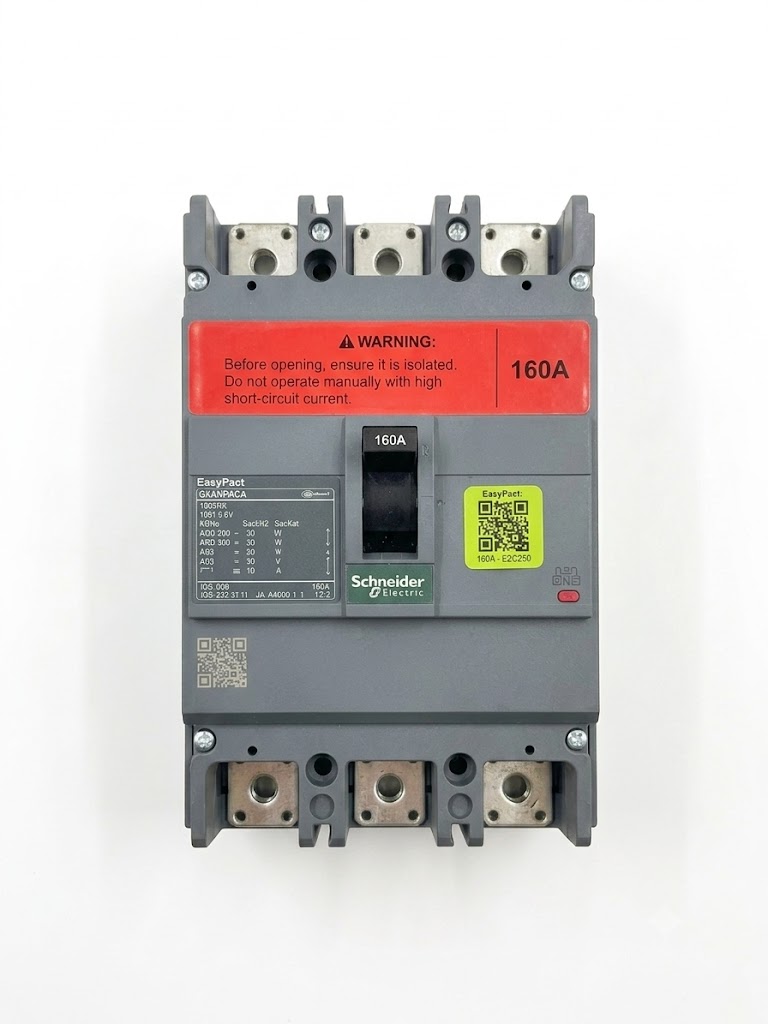
For three-phase circuits, sizing follows the same fundamental logic but requires calculating load across all three phases and ensuring balanced distribution where possible. Larger devices like the Schneider Electric EasyPact MCCB 160A 3 Pole are specifically designed for this kind of three-phase industrial and commercial application, where load calculations are more involved than a simple single-phase circuit.
When in Doubt, Ask a Professional
Circuit breaker sizing genuinely is not a place to guess or estimate loosely — the consequences of getting it wrong range from constant nuisance tripping at the mild end to genuine fire risk at the serious end. If you are at all uncertain about the calculation for your specific installation, a licensed electrician can verify correct sizing quickly, and this is money well spent relative to the risk of an incorrectly sized device.
Documentation Worth Requesting
When a licensed electrician sizes and installs protective devices for your property, it is reasonable to request documentation of the calculations and specifications used, including the specific breaker models and their ratings. This documentation is valuable both for your own records and for any future electrician who needs to understand or modify the installation.
A Real Example From an Industrial Panel
Consider a small manufacturing unit with several machines on a shared sub-main. Correct sizing here means calculating the total connected load with realistic diversity, verifying the sub-main cable can handle that load, and selecting a device like the Schneider Electric EasyPact MCCB 160A with breaking capacity confirmed against the site's actual available fault current — a calculation that genuinely should involve a qualified electrical engineer for anything beyond simple residential circuits, given the higher stakes and complexity involved.
Why This Is Worth Getting Right the First Time
Incorrect sizing discovered after installation is genuinely costly to fix — it often means re-terminating cables, replacing devices, and in commercial settings, potential downtime during the correction. The modest additional time spent verifying correct sizing calculations before installation is a small investment relative to the cost, disruption and safety risk of getting it wrong and needing to correct it later.
One More Consideration: Ambient Temperature
Cable and breaker ratings assume a standard reference temperature, and the UAE's extreme summer heat, particularly for cables run through unshaded outdoor areas or poorly ventilated risers, can reduce the effective safe capacity below the standard rating. A conservative sizing approach that accounts for this local derating factor, verified with your electrician, is genuinely worthwhile insurance in the UAE climate specifically, and applies equally to MCBs on final circuits and larger main devices alike.