
Walk into any electrical panel and you'll find a mix of devices with similar-looking acronyms — MCB, MCCB, RCCB and ELCB — each doing a genuinely different protective job. Mixing them up, or installing the wrong one for a given circuit, is one of the most common mistakes in both DIY and professional installations. This guide breaks down exactly what each device does, how they differ, and which one belongs on your specific circuit.
MCB — Miniature Circuit Breaker
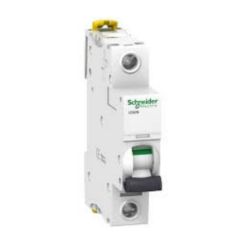
An MCB protects a circuit against overload and short-circuit current by automatically tripping when current exceeds a safe threshold. It is the standard protective device for individual circuits in homes and light commercial installations — lighting circuits, socket outlets, small appliance circuits. Rated typically from 6A up to 63A, an MCB like the Schneider Electric Single Pole MCB 16A is sized to match the specific circuit's expected load and cable rating.

MCCB — Moulded Case Circuit Breaker
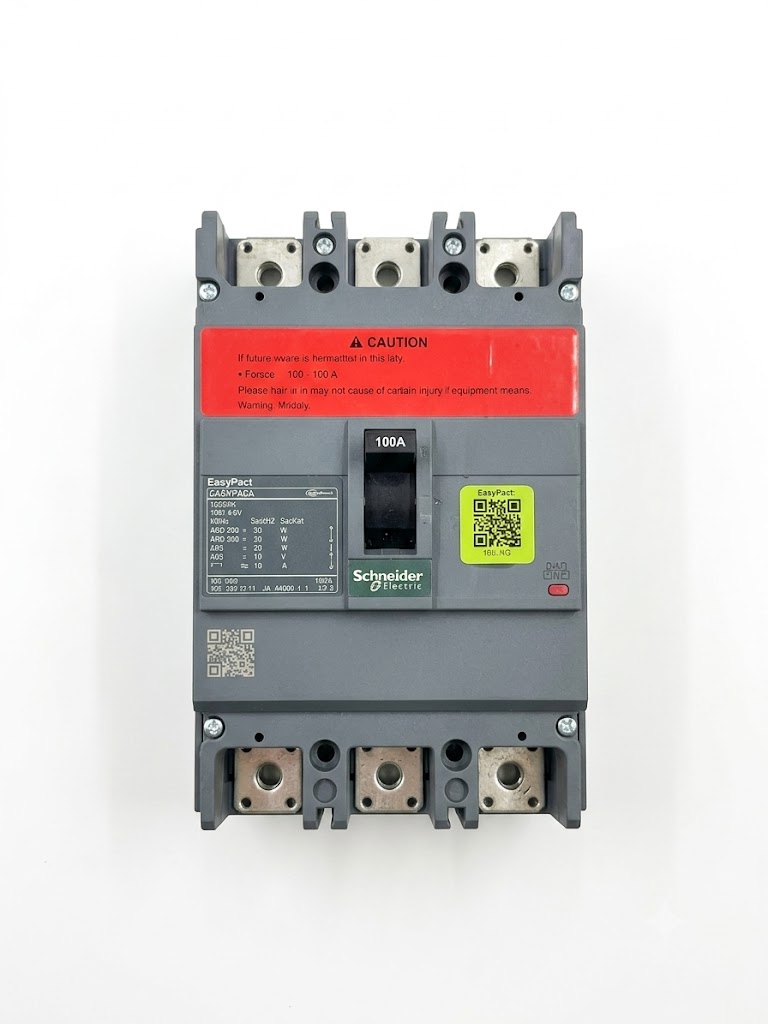
An MCCB does the same fundamental job as an MCB — overload and short-circuit protection — but is built for much higher current ratings and typically for main distribution boards, sub-mains and larger industrial or commercial circuits rather than final individual circuits. The Schneider Electric EasyPact MCCB 100A 3 Pole and Schneider Electric EasyPact MCCB 250A 3 Pole illustrate the range — MCCBs commonly cover from around 100A up to several thousand amps, with adjustable trip settings on larger units that MCBs do not offer.
RCCB — Residual Current Circuit Breaker
An RCCB protects against a completely different hazard: earth leakage current, the kind that occurs when current escapes its intended path, often through a person's body — the leading cause of fatal electric shock. An RCCB continuously monitors for imbalance between live and neutral current and trips within milliseconds if it detects leakage, but critically, it does not protect against overload or short-circuit current the way an MCB does. The Schneider Electric RCCB 40A 100mA 4 Pole is a standard example, commonly installed to protect an entire distribution board or a group of circuits from earth leakage.

ELCB — Earth Leakage Circuit Breaker
ELCB is an older term that is functionally similar to RCCB in modern usage, though the terminology and underlying technology have some technical distinctions in older voltage-operated designs versus modern current-operated RCCBs. In current UAE electrical practice, when people refer to an ELCB such as the GE BPC RCCB 4 Pole 40A 100mA, they generally mean the same residual-current protection function as an RCCB. The key point remains the same: this device protects against earth leakage and electric shock, not overload.
The Critical Point: You Usually Need Both
This is where the real confusion happens. MCBs and MCCBs protect against overload and short-circuit — they do not reliably protect a person from electric shock. RCCBs and ELCBs protect against earth leakage and shock — they do not protect against overload. A properly protected circuit typically needs both types of protection working together: an MCB or MCCB for overload and short-circuit protection, and an RCCB or ELCB for shock protection. Many modern installations use a combined device called an RCBO, which integrates both functions into a single unit per circuit.
Choosing the Right Device for Your Panel
- Individual lighting or socket circuit in a home: MCB (typically 6A–32A) plus RCCB protection upstream.
- Main distribution board incomer or sub-main: MCCB sized to the total connected load.
- Bathroom, outdoor or high-risk shock areas: RCCB or RCBO is essential, often at 30mA sensitivity.
- Industrial motor or large equipment circuit: MCCB, often with adjustable thermal-magnetic or electronic trip settings.
Sizing and Selection Basics
Selecting the correct device involves matching the rated current to the circuit's expected load and cable capacity, checking the breaking capacity (kA rating) against the available fault current at that point in the installation, and choosing the correct number of poles for single-phase or three-phase circuits. Getting any of these wrong either leaves a circuit under-protected or causes nuisance tripping — this is genuinely worth getting a licensed electrician to verify on any installation beyond simple, low-risk replacements.
Frequently Asked Questions
Can I use an MCB instead of an RCCB?
No — they protect against different hazards. An MCB does not reliably protect against earth leakage and electric shock, which is what an RCCB is specifically designed to do.
What does RCBO mean?
An RCBO (Residual Current Breaker with Overload protection) combines MCB and RCCB functions into a single device protecting one circuit against both overload and earth leakage.
Is ELCB the same as RCCB?
In modern usage they refer to functionally similar earth-leakage protection, though ELCB historically referred to voltage-operated devices while RCCB refers to current-operated devices, which is now the standard technology.
Do I need an MCCB in a home installation?
Most homes use MCBs for final circuits and may have an MCCB only at the main incomer for larger properties or where total connected load requires it — a licensed electrician can confirm what your installation needs.
Shop Genuine Protective Devices
Electrical Market UAE stocks genuine MCBs, MCCBs, RCCBs and ELCBs from Schneider Electric, ABB, Legrand and Hager, all UAE-compliant and available with fast delivery across the Emirates.
A Quick Reference Table in Words
If you remember nothing else from this guide, remember this: MCBs and MCCBs answer the question 'is too much current flowing through this cable', while RCCBs and ELCBs answer the entirely different question 'is current leaking somewhere it shouldn't be, potentially through a person'. A fully protected circuit needs an answer to both questions, which is why competent installations combine both device families rather than relying on just one.
Why UAE Installations Specifically Need Both
In the UAE's climate, with heat accelerating insulation ageing and dust affecting equipment over time, the risk of both overload conditions and gradual earth leakage development is genuinely elevated compared to more temperate environments. This makes the combination of properly rated MCBs and RCCB or ELCB protection particularly important locally, not just a theoretical best practice.
A Simple Way to Audit Your Own Panel
Open your distribution board (with appropriate caution, or better, have an electrician do this) and look for two things: individual breakers for each circuit, correctly labelled, and at least one earth leakage device protecting the circuits that need it — bathrooms, outdoor areas, general sockets. If you see only MCBs with no visible RCCB or ELCB anywhere on the board, that installation is missing a critical layer of protection and is worth having reviewed by a licensed electrician.
Working With Your Electrician on Panel Design
When discussing a new installation or panel upgrade with an electrician, understanding the distinction covered in this guide helps you have a more informed conversation about what protection is genuinely needed where. Rather than simply asking for 'circuit breakers,' you can meaningfully discuss whether a specific circuit needs an MCB alone, or an MCB paired with RCCB protection, based on the circuit's actual risk profile — wet area, outdoor, general socket use.
Real-World Panel Example
Picture a typical UAE villa distribution board: a main incomer, followed by a row of individual MCBs for lighting, socket, and appliance circuits, with RCCB protection covering the general socket and wet-area circuits, and possibly an MCCB at the main incomer if the property's total load justifies it over a standard main switch. This layered structure — overload protection on every circuit, earth leakage protection where shock risk is meaningful, and higher-capacity protection at the main incomer — is the practical expression of everything covered in this guide.
A Final Sanity Check
If you take one habit away from this article, make it this: whenever you look at any electrical panel, whether your own home's or a property you are inspecting, ask two questions. Does every circuit have appropriate overload protection, and is there genuine earth leakage protection on the circuits that need it. If either answer is unclear or no, that is worth raising with a licensed electrician promptly.